
Chapter Text
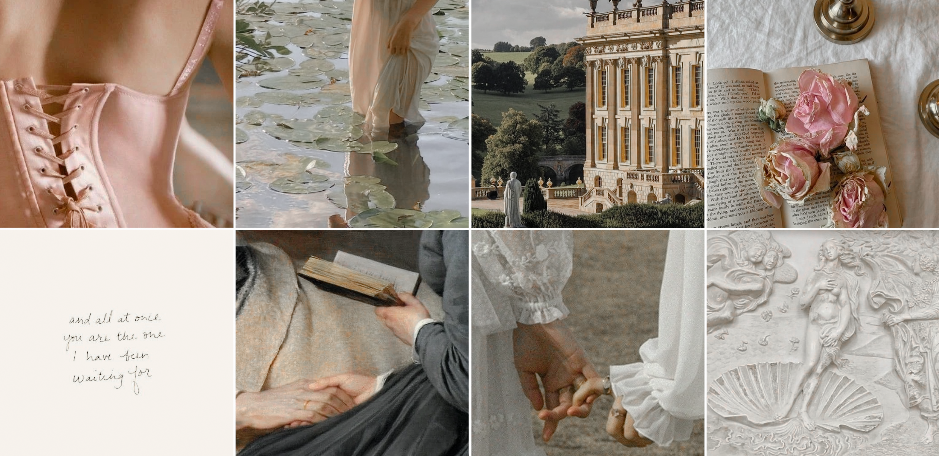
“Friendship always benefits; love sometimes injures.”
— Seneca, the Younger
London
The spinster life was much more than Penelope had imagined it would be.
At twenty, everyone in high society disregarded her when it came to any conversation about the institution of marriage. Her mother—who had never tried—had officially given up. The Bridgertons, bless them, despite their well-intentioned actions, draped her in a shroud of pity and friendly pats, as if to say, without saying, “one day that idiot will realize you're here.” Violet Bridgerton certainly tried. He never saw her. Penelope had made her peace with it long ago.
At six and twenty, she was officially on the shelf. Dust and all accumulating on her surface, at the mercy of indiscreet looks and venomous whispers of society.
At eight and twenty, she was a true spinster. Without hope, chances, or any opportunity to step out of the relegated corner. Her future had been written in stone when she was born, beautiful, but not enough to meet the high standards of the good Ton. But she grew tired of it. She tried to fit in, she tried to hold them accountable; with an entirely new wardrobe, with Lady Whistledown. And yet... yet she continued there, frozen in time, as if hanging from the ceiling in the middle of a ballroom, shining for everyone and for no one because they didn't want to look up and see her.
When they were children, Penelope remembered they spent her days playing with dolls alongside Eloise. And they would laugh and fantasized that their children would one day be best friends, grow up together like their mamas did; inseparable.
Eloise changed her mind over time, of course, and then changed it again, once she met Phillip Crane.
But soon Penelope realized that her children would apparently only exist in their childhood fantasies.
Therefore, she decided to leave. The money she had accumulated as Whistledown was enough for her to buy a small secluded rural property, with 1 or 2 servants; a place where she could write her novels in peace and simply live away from the watchful eyes and vitriol of her people.
However, this didn't make the act of leaving any lighter or easier. It didn't ease the pain of saying goodbye to everyone she loved, everything she knew, without actually saying goodbye.
Eloise certainly had something to say.
“Come with me and Philip. Stay with us and the twins, Penelope, we have more than enough space.”
Penelope laughed, holding her friend's hand.
“Don't be silly, Eloise. You're going on your honeymoon, enjoy it to the fullest. You don't need me there for that.” She smiled at her friend, raising her eyebrows.
Eloise huffed and fell onto the grass, looking at the stars. Penelope lay down beside her.
“Pen…” Eloise held her hand, squeezed it three times so slowly and made Penelope smile at her, her blue eyes watery. The Bridgerton—now Lady Crane—whispered softly, “Philip may have the key. But you have my heart.”
The tear Penelope held back fell, and she laughed, feeling silly and so loved that it seemed she would float away, while, paradoxically, longing already pulled her back to the ground, grounding her.
“I know.” She replied softly. “You're the best part of my life. The joy, the light, the grounding.”
Penelope looked at her, filtered by the moonlight Eloise was beautiful—her friend, her confidante, her sister. The two squeezed their intertwined fingers, three times in a row.
“You'll be with me when my children are born.” Eloise said.
“For all three, that you shall name after me.” Penelope kissed their joined fingers and smiled.
Escaping is easy when you're invisible. Eloise's post-wedding distraction was enough. The simple carriage she had bought was waiting for her at sunrise at the back gate of her house. Anna, her maid, had already brought her bags inside. It just so happened that Apollo saw the stranger movimentation and wouldn't stop barking.
“Shush, Apollo,” She tried. “You'll wake everyone up.” He scratched his nails on the ground, barking at her and whining.
Anna appeared at the door, confused by all the noise. Penelope tried to pass the furball, but he clung to her dress.
“Miss Penelope…” She whispered, apprehensive.
“I know.”
Well, her mother could curse her to the third generation, for it seemed she was stealing her dog.
Lady Whistledown lingered behind. Surely, she would not continue her writings from her rural estate, preferring to dedicate herself to romance or even children's history books. She recalled finding no interesting literature for children when she spent a few days with Philip's twins at the main residence of the Bridgertons, which inspired her to jot down a few things—here and there—inspired by the antics and escapades of the two little ones.
Her latest pamphlet as Lady was a sensation. There was some doubt on how to proceed; certainly, Eloise's reckless elopement and hasty marriage were the talk of the Season, but she definitely did not want to make her friend's moment her exit, which would surely raise suspicions about her identity. Eloise, as natural as ever, wanted to counter.
“I see no issue in you reporting my marriage, Penelope,” she said. Penelope sighed.
“Oh, but I will certainly make a note of it.” The writer set aside her quill to gaze at her friend. “Something you yourself will approve before we send it to print, however, I already plan to use your wedding as a distraction for my departure. I cannot raise suspicions.”
“Well, you have a point.” Eloise agreed. Penelope smiled.
“I need a new scandal.”
Eloise smiled mischievously.
“I shall help you find one.”
Two wretched parties later, they discovered that Cressida Cowper was with child. And without any suitors in sight.
Eloise's wedding was imminent. Penelope needed at least another week of Lady Whistledown after she had gone to ensure there was no suspicion.
She drafted some news she deemed noteworthy for society and decided to close her final Whistledown with the news of Cressida. She was grateful for the end of the season, which would certainly alleviate much of Society's questioning. There was never anything noteworthy happening in the countryside, and it was time for retirement. Well, she could leave as she had begun, with a small explosion.
[...]
“And lastly, it has come to this author's ears that a certain lady finds herself with child.
But I have heard no wedding bells. If this author recalls correctly, she has certainly been acting a bit desperate during these last events, chasing after an available and foolish bachelor to court her. She has never been subtle in her tactics. A young lady whom all deemed promising in the marriage market. Well, if there is a lesson to be learned, not everything that glitters is indeed gold¹.
And if you were not able to catch the hints, dear readers, I shall not elaborate further. Take heed of these words, for they are my last. And study your people, for now I see it is time to retire my pen.
But do not be too indulgent; I shall always be watching over you.
Lady Whistledown.”
The journey to her estate lasted two full days.
Penelope watched with a soft smile as the scenery gradually changed, leaving behind the city buildings and the small cobblestone streets and the bustle of carriages for a green landscape and bumpy dirt roads.
They stopped along the way once to spend the night before taking to the road again.
It was with equal measures of relief and fear that Penelope allowed herself to face her new path. She thanked the heavens for Anna, for her friend and servant, not abandoning her, and for Apollo, she smiled at the puppy sleeping in her lap, who would surely be good company.
“Anna. I hope you know I am grateful for you coming with me.” she smiled at the other young woman, squeezing her hand affectionately.
“You've always been kind to me, Miss Penelope.” she said.
The vision that graced their eyes was indeed quite astonishing. She had placed her trust in her solicitor's words when he assured her of a spacious property in fine condition, as she had originally requested—thus, she anticipated a modest yet well-appointed cottage—but she had never envisioned it to be nearly an exact replica of the manor-style estates she had glimpsed in London.
Anna let out a sigh.
“Miss…”
“Yes…” Penelope responded, equally wordless.
The dwelling before them was encircled by an expansive garden of lush, neatly trimmed greenery. It seemed to have undergone recent renovations, which did not account for its modest price, and its pink facade, reminiscent of the satin fabrics in blush rose she often encountered at the dressmaker's, possessed a certain charm. The canopy of trees flanking its sides imparted a springtime ambiance. Its large white windows appeared to provide ample ventilation within, affording vistas of a tranquil pond and charming hedgerows and flower beds. Undoubtedly, Penelope now had the opportunity to refine her gardening skills. She sighed contentedly as Anna ventured forth to explore, and John led the horses to rest in the modest two-stall stable.
Seizing a moment alone, she closed her eyes, momentarily immersing herself in the gentle rustle of leaves—a pure serenity to her ears and heart, now lightened. This was her abode. Her sanctuary.
It belonged solely to her. She was finally emancipated.
The interior of the abode proved to be even more splendid; there were far more chambers than she had initially anticipated, yet Anna assured her she could manage alone. Penelope contemplated engaging another aide soon, though she deemed it prudent to first settle in.
Penelope was bestowed with a suite nearly double the size of her former chamber, alongside a modest study adorned with a collection of tomes. Mr. Bradshaw had evidently exercised great care in selecting the residence.
Her initial days were imbued with a nervous energy, unaccustomed to such tranquility. No longer did the cacophony of carriages echo through the streets, nor the hushed murmurs at balls, or the clattering of countless dishes, or the bustle of her mother's household staff, nor the rustling of silken gowns, nor the polite laughter of debutantes and the tedious pursuit of courtship. Nor did she endure the pitying glances and disdain as the years passed and she remained unwed.
Penelope, once ensconced at her writing desk, found solace in uninterrupted compositions that extended into the fading light—she relished in this newfound tranquility. Her days were now spent in literary pursuits, accompanied by Anna, who had brought along her unmarried and trustworthy cousin, Grace, to assist with household duties. Penelope corresponded with her editor twice weekly, nearing completion of her inaugural tome; prospects were promising, albeit necessitating biannual journeys to London to visit Devlin's office and confer with her esteemed editor, the indomitable Mr. Devlin—a man she had encountered in London through the esteemed Genevieve Delacroix. He exuded unwavering confidence in her talents, his renown in the literary realm preceded only by his astuteness in the world of commerce. Though their negotiations occasionally met with contention, Mr. Devlin's character, in alignment with both accolades and aspersions, revealed naught but sagacious tenacity, tempered by fairness and progressivism—an impression that left her duly impressed. He remained the sole confidant to whom she had divulged her former identity as Lady Whistledown, in addition to her select coterie of supporters. Penelope resolved to address these periodic excursions in due course, she reasoned.
In the initial days, she eschewed the village, wary of the reception she might encounter. Time passed, transforming days into months, and she found herself immersed in the quietude of her estate, engrossed in literary pursuits and the development of her manuscript. Yet, upon introspection, she acknowledged a lingering melancholy, lamenting her susceptibility to the influence of the Ton, despite having severed ties with its denizens many moons prior. 'Twas indeed lamentable, she reflected—a life spanning over two decades, conditioned by their dictates, thwarting her aspirations, diminishing her essence, and relegating her to the shadows; unnoticed, uncherished.
In her guise as Whistledown, she unleashed her acerbic wit upon them, believing them deserving of her caustic quill and pointed prose. Yet, in her indulgence, she oft traversed the invisible boundary that demarcated Penelope from her eponymous alter ego, apprehensive lest her pen and acerbity assume dominion over the delicate vessel of her being. Her moral compass, while steadfast, was not impervious to the allure of darkness; thus, she faltered, repeatedly, with those dear to her. She failed Marina, Colin, and, most poignantly, Eloise. Confronted by her own flawed nature—her pettiness, envy, and jealousy—she grappled with maintaining her grip on the quill, amidst fingers soiled with secrets, poison, and contempt. Yet, amidst the tumult, there lingered a palpable ache—a testament to the agony and loss of innocence that underpinned the foundation of her castle, constructed from the ruins of dashed hopes, shattered dreams, and deliberate omissions.
The self-imposed seclusion, however, demanded an end. With her manuscript nearing completion, she found herself bereft of excuses. Grace and Anna reassured her, citing mere curiosity regarding her identity and personage, and attesting to the warmth and hospitality extended by the villagers. Yet, a lingering unease persisted, a vestige of former insecurities. How could she allow the opinions of those she had long ceased to seek validation from to wield such power? Why regress to antiquated habits long since vanquished?
This was a new chapter, she resolved—one untainted by the remnants of her erstwhile existence in Society, her mother's admonitions, or her former insecurities.
Thus attired in her simplest yet elegant day dress, she embarked for the village—indulging in a modest square neckline—reveling in the ethereal allure of emerald-hued muslin that gracefully enveloped her alabaster complexion. The day, overcast and somber, provided a fitting backdrop. Despite Anna's insistence upon a bonnet, Penelope, resolute in her bearing, ventured forth, accompanied by Grace and Anna, in a diminutive cabriolet—acquired by John from the town, through the judicious allocation of Penelope's resources—more practical for short jaunts than their grand carriage, and easily managed by all.
Though initial trepidation persisted, it waned amidst lively discourse and the soothing rhythm of carriage wheels upon the cobbled road. A change of scenery beckoned—a prospect both invigorating and beguiling.
"Miss Penelope, the village is quite charming," Anna remarked dreamily, holding the horse's reins while Grace huffed and focused on her sewing.
“Indeed” Grace grumbled, needles in hand. “It’s all about the village, and not the giant blacksmith you cannot stop talking about, all sweetness and dreams when it comes to him.”
Penelope smiled, intrigued by the unfolding drama. In the first few days, she had observed the pearl that was Grace—graceful, as her name suggested, yet wholly straightforward and sincere; qualities Penelope had glimpsed in small doses during their weeks together, appreciating if not entirely relishing the girls' fraternal banter. Where Anna was gentle and respectful, always offering kind words and sound advice, Grace was impetuous and fervent, yet remarkably kind, her pragmatism complementing Anna's sweetness perfectly.
A blush crept Anna’s cheecks.
“Don't be ridiculous.” She retorted, flustered. Grace huffed once more. “I was not dreaming about him.” Anna countered, nervously. "Nor am I sweet on him!” she added, with a belated flourish.
“You couldn't tear your gaze away from him; let's hope you'll maintain your composure in the presence of Miss Penelope.” Grace teased, exchanging a glance with Penelope, who smiled. Anna refused to meet their gaze or engage in her cousin's teasing, preferring to murmur to herself and to the horse, Sleepy.
“I'm nothing if not a hopeless romantic,” Penelope remarked. Anna groaned. Grace let out a amused chuckle.
“Miss Penelope!” the former exclaimed with an annoyed grumble. “Allow me to remind you where your loyalty ought to lie.”
Grace jested, “You're resorting to that now!” she teased further.
Penelope laughed.
“I merely found him handsome,” Anna mumbled after a moment of silence. “God, and he was so kind when I needed the horseshoes for Sleepy. I didn't think a man of his stature could be so gentle. He even asked the name of our horse!” she exclaimed, unable to maintain her composed facade, sweetness and anxiety dripping from her rapid words and exasperated explanation.
Penelope and Grace exchanged a glance. Anna was young; younger than Penelope, at one and twenty, and had been raised by a family that loved and protected her to the best of their abilities. Grace was only two years older than her cousin, and if the faint scars on her strong arms were any indication, they were a testament to a tougher, more experienced existence than Anna's—and certainly Penelope's own.
“Anna,” she said, solemnly. “And Grace,” Penelope added. “We must be cautious with our hearts.” She advised. “We don't yet know any of these people, and while making friends is always good, we must be vigilant.” Penelope clarified. “Know that you can come to me if you find yourselves in any situation, of any kind; I will help and support you. We're not in London. You're under my protection. And here, we can be friends, confidantes; forget any rigid decorum and conventions between us.” The girls shared giggles at Penelope's words.
“We'll be vigilant, miss.” Anna smiled.
“And cautious.” Grace added. “And indeed, we need to shed some of those silly rules—who’s in any need of them, after all?”
They burst into laughter.
“Caution is our ally,” Penelope began. “Meanwhile friendship will be our solace.”
Amidst their light-hearted banter, Penelope barely noticed they had arrived at the heart of the village—a bustling marketplace teeming with life and activity.
There were a considerable number of stalls and shops at the end of the street, with people bustling between them with large sacks and baskets. They quickly alighted from the cabriolet and left it in the care of some youths Anna and Grace recognized from previous trips, who offered to watch over it in exchange for a few coins.
The three of them set off carrying their small baskets toward the road flanked by vendors on either side. Anna and Grace knew what they needed for cooking, as they could experiment as much as they liked with the menu for the four inhabitants of the house, and carried a list of all the other supplies they required.
Penelope hoped to purchase more quills for herself, candles, and paper. Perhaps some hair ribbons for Anna and Grace, and if she could find it, she wanted some strawberry jam. She also wouldn't be able to resist buying books if they stumbled upon a library on the way.
The truth was, now that she had no more Season events to attend, there wasn't much to buy. Her house was perfectly furnished. Her dresses were in good condition, all new since she had refreshed her wardrobe at the start of the Season. John was responsible for any household maintenance equipment, and the girls for the supplies. Today's visit was nothing if not an experiment.
The people greeted her as they passed by and were indulgent when she stopped at their stalls to observe their wares, all very solicitous and polite. Penelope enjoyed chatting with each of them as they introduced the village to her and pointed out where she could find the products she needed when they didn't have them.
When she heard giggles beside her, she looked at the girls. Anna seemed as red as a beetroot while Grace teased her incessantly in whispers. Penelope looked to the other side and immediately knew what it was about.
The blacksmith's stall was just to her left, filled with ironwork in front, with a few people queuing up at his booth, but she could distinguish the figure towering above all as he hammered something on a solid table. He was quite large, seeming twice the size of the petite and slender Anna, and though Penelope couldn't quite tell how, he seemed to have a kind face beneath his thick beard.
Penelope linked arms with the girls.
“Oh, I understand now, Anna,” Penelope teased. “This village is charming.” Grace chuckled as her victim blushed even more.
They passed by the stall, but Penelope, with her keen eyesight, noticed that the man had momentarily ceased his work to watch them pass; his gaze fixed on the tender and diminutive figure of Anna, sandwiched between Grace and Penelope.
She smiled to herself.